
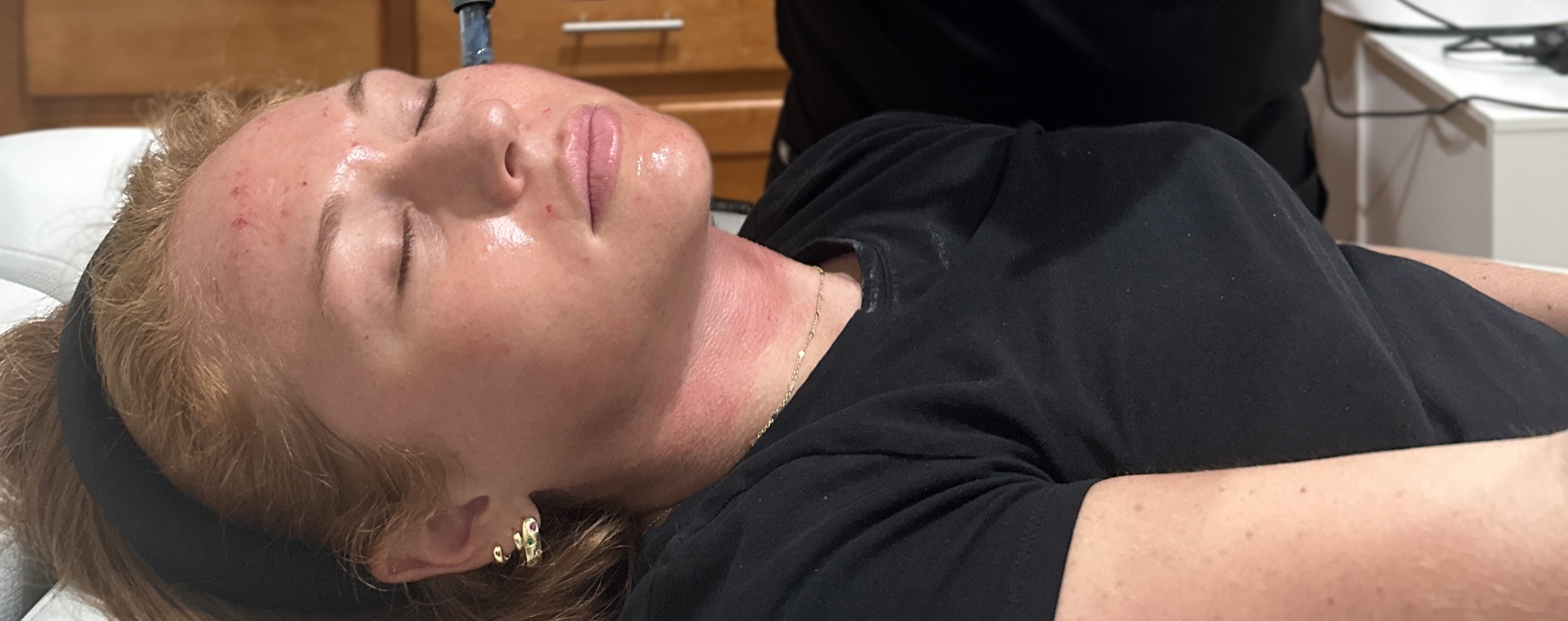

Are you researching natural ways to rejuvenate your face? If so, you have probably seen the term Vampire Facial, but have you heard of the iPRF Microneedling Facial? On the surface, these treatments seem similar. Both use your own blood and microneedling to regenerate aging tissues, but thanks to new science we have updated processing protocols that produce a more effective second-generation iPRF that contains more growth factors and regenerative cells than first-generation PRP. Here is the how and why of using iPRF at Anagen Medical Institute in Edmond, OK.
The Quick Answer: How Are They Different?
Vampire Facial: This is the brand name most people know. It uses traditional Platelet-Rich Plasma (PRP), a first-generation concentrate that is typically processed with anticoagulants — sometimes bovine thrombin — to keep the platelets in a liquid form.
iPRF Microneedling Facial: This uses Injectable Platelet-Rich Fibrin (iPRF), a second-generation concentrate. We spin it at lower speeds with no anticoagulants and no animal-derived additives, which lets your own blood form a natural fibrin matrix that releases growth factors gradually over the following days.
Put simply, "Vampire Facial" is the well-known brand name, and iPRF is the next-generation science that has moved past it.
Why Does the Processing Matter So Much?
1. No Anticoagulants. No Bovine Thrombin.
Traditional PRP usually needs additives to stay injectable. With iPRF, we use a slow-spin protocol that allows your blood to form its own natural fibrin matrix — no anticoagulants, no animal-derived clotting agents, nothing foreign added in. What goes back into your skin is as close as we can get to what your body would produce on its own.
2. A Slow, Sustained Release of Growth Factors
This is the difference patients feel the most. Traditional PRP unloads its growth factors in a single burst over just a few hours. iPRF works differently — the fibrin scaffold acts like a slow-release reservoir, dispensing growth factors steadily over 7–10 days. Because collagen remodeling takes weeks, not hours, that sustained release is a meaningful upgrade.
3. More White Blood Cells and Regenerative Cells
The gentler iPRF spin keeps more of the cellular components your body actually uses to repair tissue, including monocytes and circulating progenitor cells. Traditional PRP protocols spin most of those out and discard them.
If you want to go deeper on the underlying science, take a look at our companion article: Understanding the PRP and PRF Process.
iPRF Facial vs. Vampire Facial: A Side-by-Side Look
| Feature | Vampire Facial (PRP) | iPRF Facial |
|---|---|---|
| Generation | 1st generation | 2nd generation |
| Anticoagulants | Often required | None |
| Bovine thrombin | Sometimes used | Never |
| Growth factor release | Hours | 7–10 days |
| Fibrin matrix | No | Yes (natural scaffold) |
| White blood cells / progenitor cells | Reduced | Retained |
| Best for | Surface-level rejuvenation | Collagen rebuilding, longer-lasting results |
What Does an iPRF Microneedling Facial Actually Look Like?
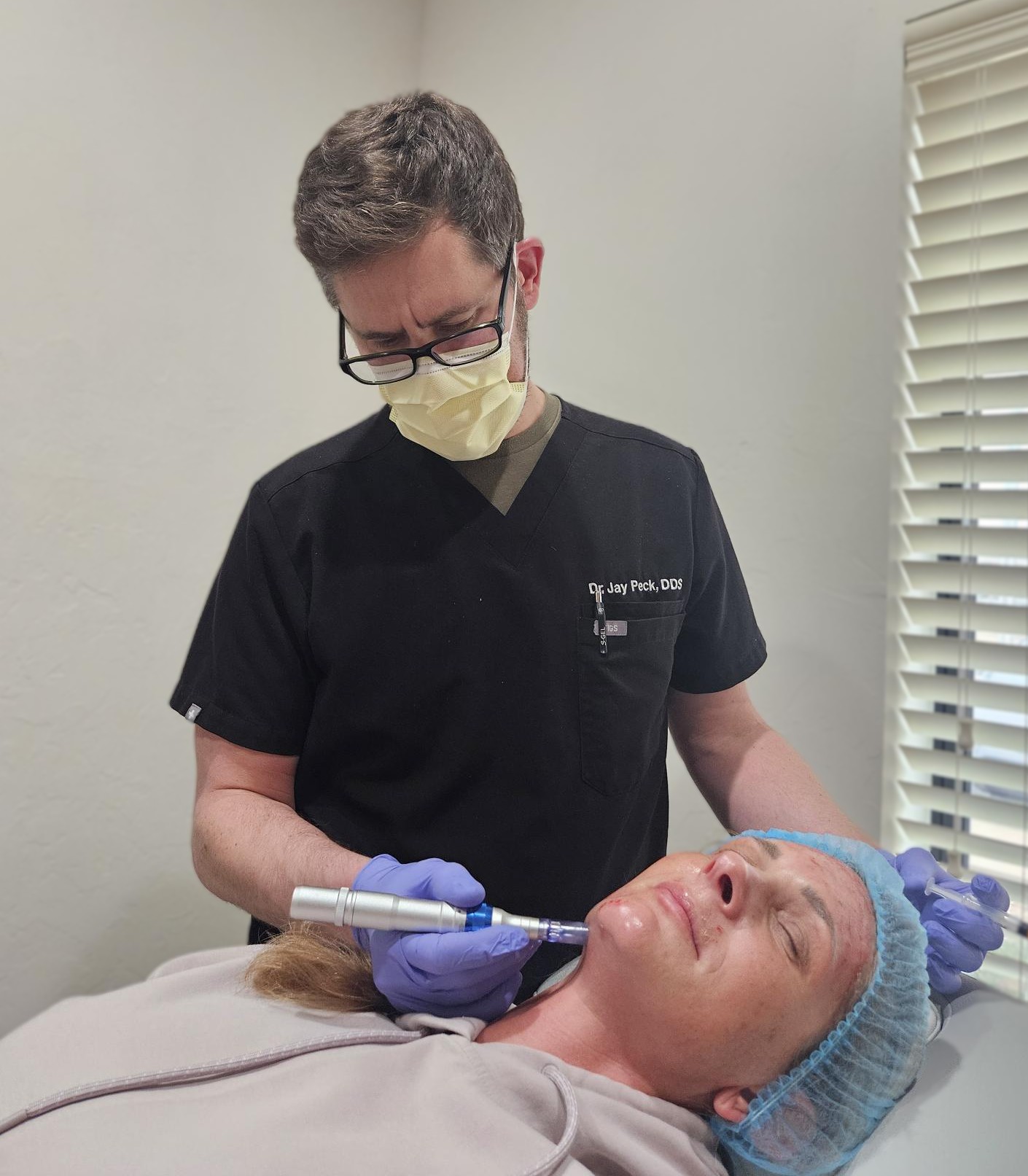 Dr. James Peck, DDS, FAGD performing an iPRF microneedling facial at Anagen Medical Institute in Edmond, OK.
We start with a small blood draw and process it in our centrifuge using the iPRF protocol — no additives, nothing artificial.
From there, we apply the fibrin-rich concentrate through microneedling and, when it makes sense, inject it directly into targeted areas like the under-eyes, nasolabial folds, forehead, and cheeks.
Once it is in place, the fibrin matrix integrates with your own tissue and quietly releases growth factors over the next week.
What Should You Expect After Treatment?
Days 1–3: You may notice mild redness or pinkness, similar to a light sunburn. Most patients are comfortable wearing makeup again after about 24 hours.
Weeks 2–4: Skin texture and tone start improving as your collagen production ramps up.
Months 2–3: This is where you typically see peak results — improved firmness, brighter skin, and softer fine lines.
6–12 months: Results are usually well-maintained, and many of our patients return for a single annual touch-up.
Going Beyond the Face: Why We Also Use ePRF
If you are looking for subtle volume restoration without turning to synthetic fillers, we also use ePRF (extended Platelet-Rich Fibrin). It is briefly heated during processing to create an injectable gel that behaves like a natural, biologically active filler — adding structure while still triggering your body's own collagen growth. It is one of the cornerstones of our natural aesthetic optimization approach.
Frequently Asked Questions
Is an iPRF facial really better than a Vampire Facial?
For most patients, yes. iPRF avoids animal-derived additives, releases growth factors over a much longer window, and keeps more of the cellular components your body actually uses to repair tissue. The Vampire Facial is a powerful brand name, but iPRF is the next-generation science behind it.
How long do iPRF facial results last?
Most patients enjoy noticeable improvement for 9–12 months from a single treatment, and annual maintenance is the norm.
Is iPRF safe?
Because iPRF uses only your own blood — with no animal-derived additives and no anticoagulants — the risk of allergic reaction or rejection is essentially eliminated.
How many treatments will I need?
Most patients start with a series of 2–3 treatments spaced 4–6 weeks apart, then transition to a simple annual maintenance schedule.
Ready to Take the Next Step?
If you have been considering a Vampire Facial, it is worth knowing how much the science has evolved since that treatment was first popularized. Learn more about our natural aesthetic optimization services, or request a consultation at our Edmond, OK clinic and we will help you decide which PRF approach is the right fit for your skin.