

Most people don't go looking for PRP knee injections until something else has already failed them. The therapy helped for a while, then stopped. The cortisone shot worked beautifully for two months and then didn't. Somebody mentioned knee replacement and the idea landed badly. So they start searching, and PRP and PRF turn up together in every result, described as though they're two names for one thing.
They're related. They are not the same, and the difference is worth understanding before spending money on either.
The Problem Inside the Joint
Healthy cartilage lets the bones of the knee slide past one another with almost no friction at all. Arthritis is that cartilage thinning, gradually, usually across years rather than months. Less cushion means more direct contact between bone surfaces. Hence the grinding, the swelling, and the stiffness that's always worst before the joint has had a chance to warm up.
The symptoms tend to follow a recognizable arc. Pain shows up during activity first, then lingers after it. Stairs get harder. Mornings get slower. Somewhere along the way, the knee stops bending as far as it used to and nobody remembers exactly when that started.
How PRP Works
It begins with a blood draw, roughly the same as any routine lab test. The sample goes into a centrifuge and spins for about ten to fifteen minutes, which separates the blood into layers and concentrates the platelets into one of them.
Platelets matter here because they carry growth factors, the signaling proteins the body normally deploys to repair injured tissue. Concentrating them and injecting that concentrate into an arthritic knee delivers a much heavier dose of those signals than the joint would ever get on its own.
Of the regenerative options available for knee arthritis, PRP has the deepest research base. Systematic reviews pooling results across many trials consistently point toward improved pain scores and better function, with the benefit often lasting somewhere between six months and a year. Compare that to a corticosteroid injection, where relief tends to fade sooner and repeated doses raise legitimate concerns about cartilage health, and the appeal becomes clearer.
Where PRF Diverges
Same blood draw. Different processing.
PRF is prepared without an anticoagulant, which allows the blood to clot naturally during centrifugation. The result is a fibrin matrix, essentially a soft biological scaffold with platelets and white blood cells caught inside it. Instead of releasing growth factors in one burst, that scaffold lets them out slowly.
In theory, a longer release window means longer biological activity in the joint. Whether that translates into measurably better outcomes for knee arthritis specifically is a question the research hasn't answered yet. PRF is simply newer, with fewer trials behind it than PRP has accumulated.
Honest Expectations
Patients who do well with these injections generally describe the same set of changes: less pain, easier movement, and getting back to activities they'd stopped attempting. Since the material comes from the patient's own blood rather than a manufactured product, the safety profile is favorable for most people.
Now the limits. Cartilage that's already gone does not come back. Osteoarthritis is being managed here, not cured. Response varies quite a bit between patients, and the biggest predictor is how much healthy joint tissue remains at the start. A moderately arthritic knee has more to work with than a severely damaged one.
Reasons Someone Might Not Be a Candidate
Advanced bone-on-bone arthritis is the most common reason results disappoint. Growth factors need something to act on, and past a certain point there isn't much left. Active infection rules out treatment outright. Certain blood disorders and anticoagulant medications complicate things enough that they need to be reviewed carefully beforehand.
Expect some soreness and possibly a little swelling around the injection site for a day or two. That's an expected response, not a complication. And because insurers still classify PRP and PRF as investigational for orthopedic use, patients should plan on paying out of pocket.
Compared to Everything Else on the Menu
Conservative care comes first for a reason. Physical therapy, weight management, and anti-inflammatory medication genuinely help mild arthritis, and they carry almost no risk. Cortisone injections deliver fast relief that fades, and repeat use over the years brings its own tradeoffs for cartilage and surrounding tissue. Hyaluronic acid, often marketed as a gel shot, lubricates the joint mechanically without doing anything biological. Total knee replacement is the definitive answer for arthritis that's severe enough, though the recovery is measured in months. PRP and PRF occupy the middle of that range: more biologically active than a lubricant, considerably less disruptive than surgery.
The Profile That Responds Best
Mild to moderate osteoarthritis on imaging. A conservative treatment history that didn't hold. A patient who'd prefer to postpone surgery, or avoid it. That combination is where PRP and PRF tend to earn their place. Anything short of an actual evaluation with imaging is guesswork, though, and a knee that looks fine on paper can tell a different story on an X-ray.
What the Appointment Looks Like
Consultation and exam first, then the blood draw, then the wait while the centrifuge runs. The injection itself is over in a few minutes and is often performed under ultrasound guidance so the placement inside the joint is accurate rather than approximate.
Normal daily activity usually resumes within a day or two. Heavier exercise waits a bit longer, giving the joint time to respond before it goes back under load.
When to Have the Knee Looked At
Pain lasting beyond a few weeks, interfering with sleep, or ignoring rest and over-the-counter anti-inflammatories deserves a real evaluation. Imaging is the deciding factor in most cases, since it shows how far the arthritis has actually progressed and therefore which treatments still have a reasonable chance of working.
PRP and PRF Knee Injections Serving the Oklahoma City Metro
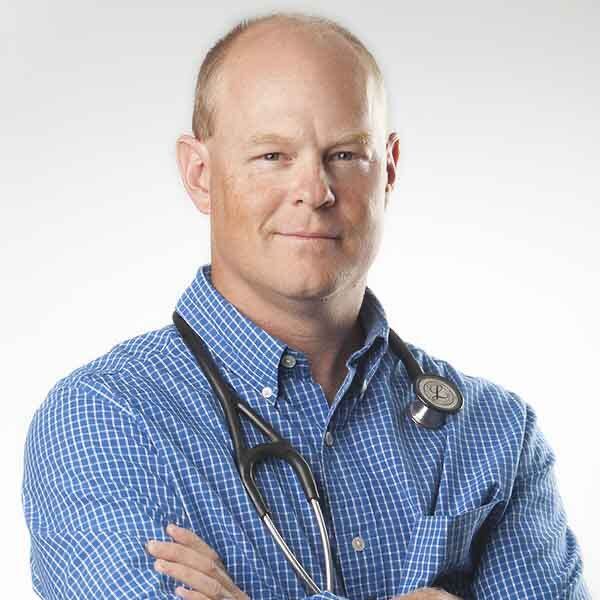
Anagen Medical Institute in Edmond sees patients from throughout the Oklahoma City area for this exact evaluation. Dr. Jay Peck and the clinical team review each knee on its own terms, weighing imaging findings against symptoms and what the patient is hoping to get back to, before recommending PRP, PRF, or a different direction entirely.
Request a consultation with Anagen Medical Institute to find out whether a non-surgical option makes sense for your knee. Learn more about our joint and tendon pain care.
Frequently Asked Questions
How much does the injection hurt?
Roughly what you'd expect from any joint injection. Soreness afterward lasts a day or two for most people. No sedation is involved.
How quickly does it start working?
Not immediately. Some patients notice a difference within a few weeks; for others improvement accumulates over two or three months.
PRP or PRF, which one should I get?
PRP has the stronger evidence base for knee osteoarthritis at this point. PRF's slower release of growth factors is an interesting approach with less research behind it. The right choice depends on the knee and should come out of an evaluation.
Can this help me avoid a knee replacement?
It can delay one, sometimes for years. Whether it prevents surgery permanently depends largely on how advanced the arthritis is when treatment starts.
Is any of this covered by insurance?
Rarely. Both treatments are still labeled investigational for orthopedic use, which means out-of-pocket cost in nearly every case.
How many treatments does it take?
Varies by patient and protocol. A single injection is sometimes enough, though a short series spaced several weeks apart is also common.