

When a knee flares up, cortisone is often the first injection a doctor reaches for, and for good reason: it works fast. But patients who've had a few rounds of cortisone shots over the years start to notice a pattern, the relief doesn't last as long as it used to, and some begin asking whether PRP might serve them better over time. The honest comparison isn't about which shot feels better next week. It's about what each one is actually doing to the joint, and what that means months down the road.
Two Very Different Jobs
Cortisone, a corticosteroid, works by directly suppressing the inflammatory chemicals circulating in the joint. It's a powerful, fast-acting anti-inflammatory, which is why patients often feel better within days. What it doesn't do is address the underlying degeneration driving the arthritis in the first place, it calms the fire without doing anything to rebuild what's been damaged.
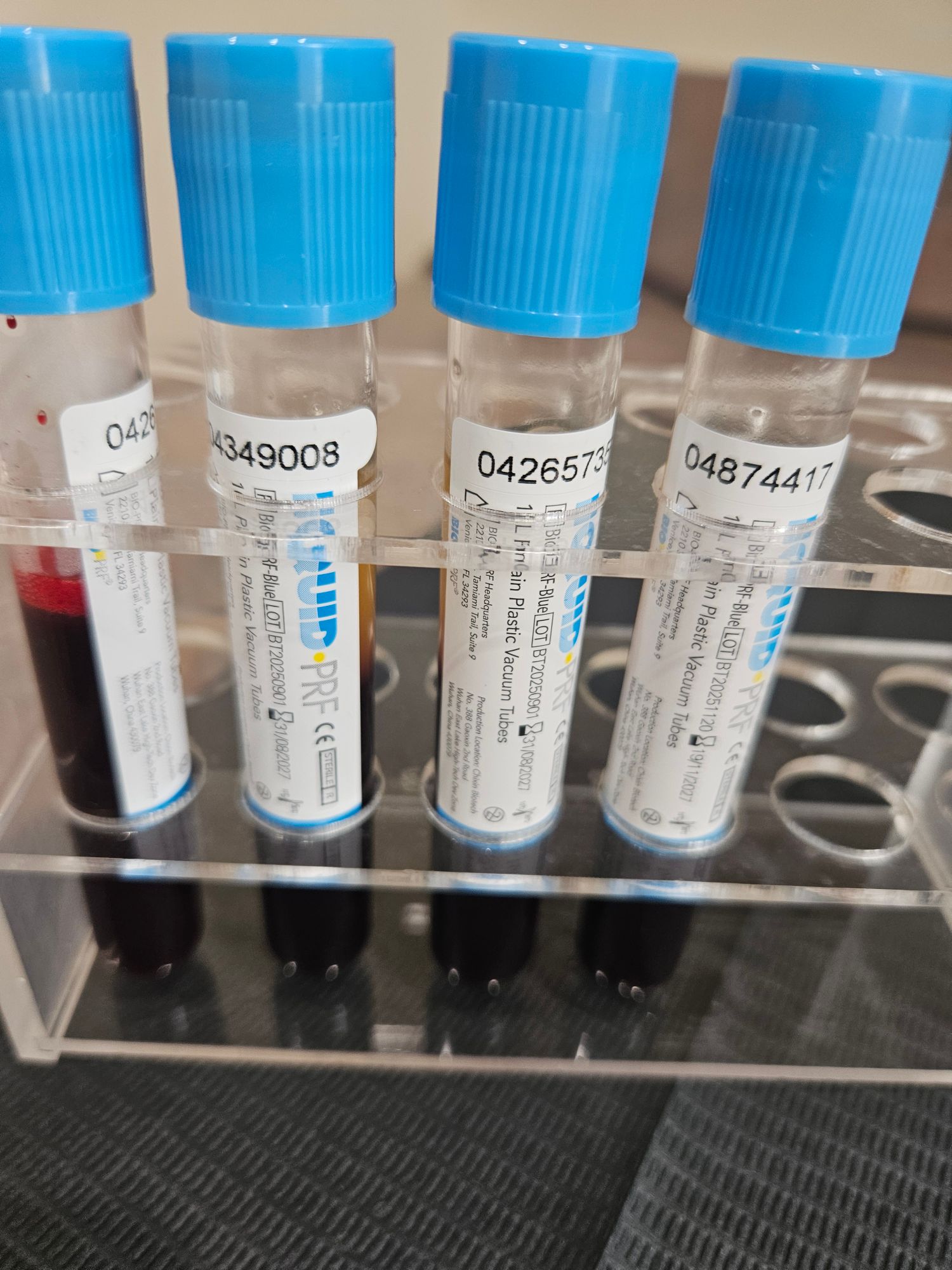
PRP works from a different angle. A small blood sample is drawn and spun in a centrifuge to concentrate platelets, which release growth factors involved in tissue repair. Injected into the knee, those growth factors are thought to encourage cartilage-supporting cells to stay active, tone down the joint's inflammatory signaling, and support the surrounding tissue over time. It's a slower process, there's no instant relief the way there is with cortisone, but the effect tends to build rather than fade quickly.
What the Head-to-Head Research Shows
This is one of the more directly studied comparisons in orthopedic injections, and the pattern across the research is fairly consistent. A meta-analysis of eight randomized trials involving more than 600 patients found that PRP outperformed corticosteroid injections on pain and function at three, six, and nine months, and that the gap between the two actually widened over time rather than narrowing. Put simply: cortisone tends to win in the first few weeks, and PRP tends to pull ahead from around three months onward.
Other trials following patients for a full year found something similar, both treatments provided real relief, with the biggest early gains showing up between six weeks and three months, but PRP's benefits proved more durable over the following months while cortisone's effect faded sooner. It's worth noting that the overall evidence quality here is rated low to moderate by reviewers, partly because PRP preparation isn't standardized across studies, so these findings should be read as a strong signal rather than settled fact.
The Cartilage Question
This is the part of the comparison that tends to change how people think about repeated cortisone use. A widely cited two-year randomized trial, published in JAMA, compared knee injections of triamcinolone (a corticosteroid) given every three months against a saline placebo. The steroid group lost measurably more cartilage volume over the study period than the placebo group, and notably, showed no meaningful improvement in pain over saline either. Related research has also found that repeated steroid injections can thin the meniscus over time.
This doesn't mean a cortisone shot here and there is dangerous, occasional use for an acute flare is a reasonable, well-established tool. But it's part of why most orthopedic guidance caps steroid injections in the same knee at roughly three to four per year, spaced at least three months apart, rather than treating it as something to repeat indefinitely. PRP, being made from the patient's own tissue rather than a synthetic anti-inflammatory, hasn't shown this same cartilage-thinning effect in the available research.
Who Tends to Benefit More From Each
Cortisone still has a clear role. It's often the right call for an acute flare, a joint that needs fast relief before an event or a period of high activity, or as a bridge while a longer-term plan gets worked out. It's also the more predictable, insurance-covered option, which matters practically for a lot of patients.
PRP tends to make more sense for patients with mild-to-moderate arthritis who are looking for longer-lasting relief, want to avoid the cumulative tissue effects of repeated steroid use, and are willing to accept a slower onset and an out-of-pocket cost in exchange. Some research also suggests patients with a healthier body weight tend to see better PRP outcomes, though it's not the only factor a provider will weigh. Neither option is a substitute for surgery in advanced, bone-on-bone arthritis, where both treatments tend to offer smaller, less predictable benefit.
Risks and Honest Limitations
Cortisone's main long-term risk is the cartilage and soft-tissue effect described above, along with a small chance of temporary blood sugar elevation in diabetic patients and, rarely, joint infection. PRP's risks are more modest, mostly soreness and swelling at the injection site for a day or two, since it's made from the patient's own blood rather than an injected medication. Neither treatment reverses existing structural damage, and PRP's evidence base, while growing, is still less standardized than the decades of data behind corticosteroid injections.
One point worth knowing if you're considering both: expert consensus generally recommends against mixing PRP with a corticosteroid or anesthetic in the same injection, since the steroid can interfere with the biologic activity PRP is meant to provide.
What Treatment Involves
A cortisone injection is quick: the knee is cleaned, the medication is injected, often with imaging guidance to confirm placement, and most patients are in and out within minutes, with relief typically showing up within a few days.
A PRP appointment takes a bit longer. Blood is drawn and processed in a centrifuge for roughly 10 to 15 minutes before injection into the joint. Many protocols call for a short series, commonly one to three injections spaced roughly a week apart, since research suggests a series performs better over the following year than a single injection alone. Some soreness in the days afterward is expected and reflects the treatment doing its job.
When to Get Evaluated
If you've had cortisone injections before and noticed the relief getting shorter each time, or if you're trying to manage knee arthritis without repeatedly returning for steroid shots, it's worth having a conversation about where your arthritis actually stands on imaging and whether PRP is a reasonable option for your specific joint. The right answer often depends less on personal preference and more on how advanced the arthritis is and what you're trying to accomplish long-term.
Comparing Your Options in Edmond, Oklahoma
Choosing between cortisone and PRP isn't about picking a side, it's about matching the treatment to your joint, your timeline, and how you've responded to injections in the past. At Anagen Medical Institute in Edmond, Dr. Jeffery Davenport and the clinical team review each patient's imaging and history individually to help determine whether cortisone, PRP, or a combination approach over time makes the most sense for their knee arthritis.
Schedule a consultation with Anagen Medical Institute to talk through your options and find a plan built around your knee, not a generic recommendation.
Frequently Asked Questions
Which works faster, PRP or cortisone?
Cortisone. Most patients feel relief within days of a cortisone injection, while PRP's benefits build more gradually over several weeks.
Which lasts longer, PRP or cortisone?
Research generally favors PRP for longer-term relief, with benefits commonly reported at 6 to 9 months or more, compared to roughly 2 to 4 weeks for a typical cortisone injection.
Is it bad to get cortisone shots in your knee often?
Frequent, repeated cortisone injections have been linked to measurable cartilage volume loss over time in clinical research, which is why most guidance limits steroid injections in the same knee to about 3 to 4 per year.
Can I get PRP and cortisone at the same time?
Expert guidance generally advises against combining them in the same injection, since corticosteroids can interfere with PRP's biologic effect. Sequencing them separately, with spacing between treatments, is a more common approach when both are used.
Does insurance cover PRP for knee arthritis?
Usually not. Most insurers, including Medicare, still consider PRP experimental for knee osteoarthritis, so it's typically an out-of-pocket cost, while cortisone injections are generally covered.
Is PRP or cortisone better for severe, bone-on-bone arthritis?
Neither performs as reliably in advanced, bone-on-bone arthritis as they do in mild-to-moderate cases. Patients with severe arthritis and significant functional limitation are often better served by discussing surgical options with their provider.