
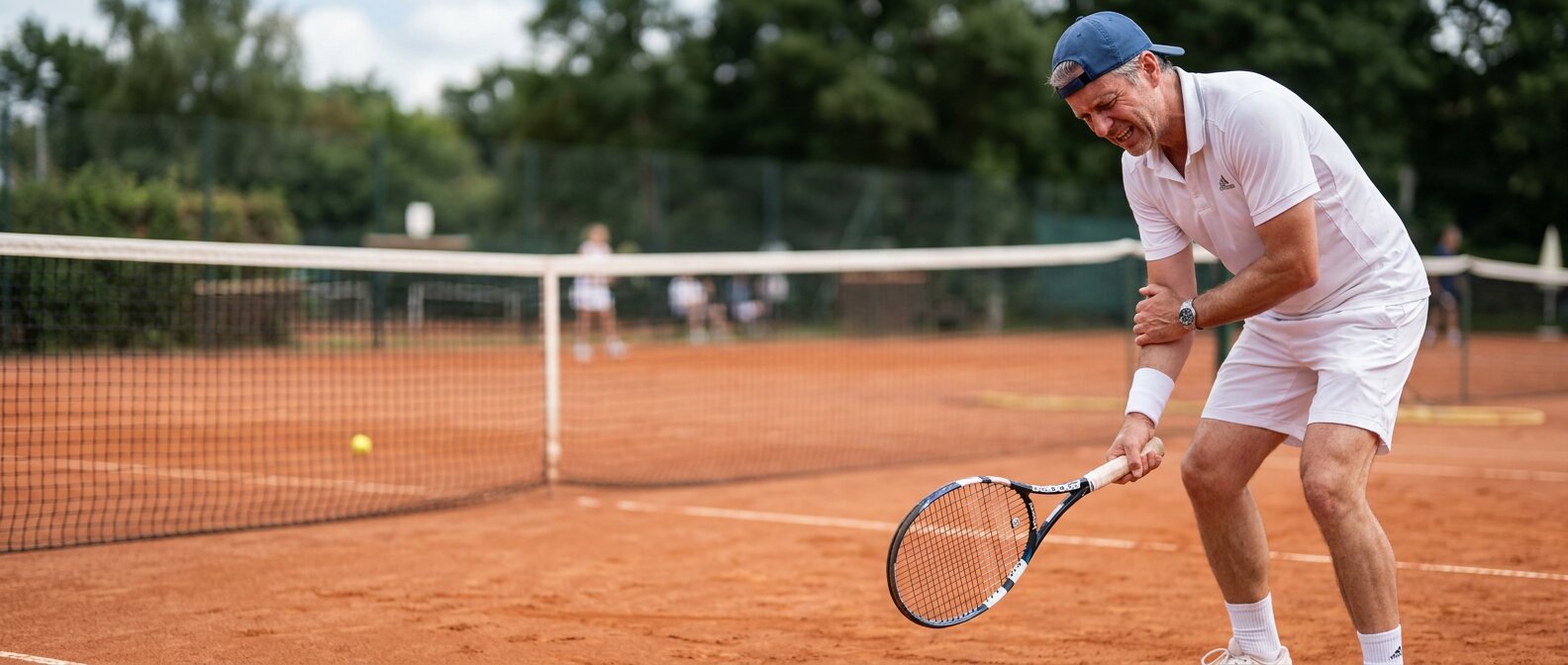
Chronic elbow pain that won't quit — whether from tennis elbow (lateral epicondylitis) or golfer's elbow (medial epicondylitis) — can drag on for a year or more with conventional care. At Anagen Medical Institute in Edmond, OK, we use PRP and iPRF regenerative therapies to help the tendon do what it was trying to do all along: heal.
Tennis Elbow vs. Golfer's Elbow: Same Problem, Different Side
Both conditions are forms of chronic tendinopathy at the elbow, but they affect opposite tendons:
Tennis elbow (lateral epicondylitis): Pain on the outside of the elbow, where the wrist extensor tendons attach. Triggered by gripping, lifting with the palm down, and racquet sports.
Golfer's elbow (medial epicondylitis): Pain on the inside of the elbow, where the wrist flexor tendons attach. Triggered by gripping, throwing motions, and golf or pitching mechanics.
Despite the names, only a fraction of patients we treat actually play tennis or golf. The mechanism is the same: repetitive load that overwhelms the tendon's ability to repair itself.
Why Conventional Treatment Falls Short
The standard plan — rest, anti-inflammatories, a brace, physical therapy, and often a cortisone shot — works for some patients in the early stages. But once the condition becomes chronic (typically more than 3 months), the problem isn't really inflammation anymore. It's failed healing: degenerated tendon tissue that never finished repairing.
Cortisone can knock down pain for a few weeks, but multiple studies show it produces worse long-term outcomes than no injection at all, because steroids weaken tendon tissue with repeated use. That leaves patients in a frustrating cycle of relief and relapse.
How PRP and iPRF Treat Chronic Elbow Tendinitis
Platelet-Rich Plasma (PRP) and Injectable Platelet-Rich Fibrin (iPRF) are concentrates of your own platelets and growth factors. When delivered into a damaged tendon, they trigger a real biological repair response — the one your body was supposed to complete months ago.
iPRF is a more advanced second-generation concentrate. It releases growth factors gradually over several days instead of all at once, which is well-suited to slow-healing tissues like tendons. Read more in Understanding the PRP and PRF Process.
The Treatment Visit
A small blood draw, processed in our centrifuge to concentrate the platelets.
An ultrasound-guided injection directly into the damaged tendon at the lateral or medial epicondyle.
A short rest period followed by a graded return-to-activity protocol.
The whole appointment typically takes under an hour.
What the Research Shows
PRP for chronic lateral epicondylitis has been studied extensively, including in randomized controlled trials. Reported success rates generally land in the 70–85% range, with benefits that continue to build out to 6 and 12 months — the opposite trajectory of cortisone, which fades. Studies on iPRF for tendon repair show comparable or improved outcomes due to the sustained release of growth factors.
Recovery Timeline
Days 1–7: Mild soreness as the healing cascade begins. Most patients work the next day.
Weeks 2–6: Progressive return of grip strength and pain reduction.
Weeks 6–12: Most patients return to full activities, including racquet sports and golf.
3–6 months: Continued tendon remodeling. Final results typically reached by month 6.
"Six months of physical therapy didn't help my tennis elbow. One iPRF treatment and I was back to playing within 8 weeks." — David S., Moore, OK
Who's a Good Candidate?
Regenerative therapy is most effective for patients who:
Have had elbow pain for more than 3 months
Want to avoid surgery (tenotomy or tendon release)
Have not had multiple cortisone shots in the past year
Are willing to follow a brief activity-modification protocol after treatment
Frequently Asked Questions
Is PRP better than cortisone for tennis elbow?
Short term, cortisone can reduce pain faster. Long term, PRP is consistently superior because it actually rebuilds the tendon. Research shows the gap widens at 6 and 12 months.
How many treatments will I need?
Most patients respond well to a single PRP or iPRF injection. Severe or long-standing cases may benefit from a second treatment 6–8 weeks later.
How soon can I return to sports?
Light activity within 1–2 weeks; full return to racquet sports or golf typically by week 8–12, guided by your symptoms and a graded protocol.
Does insurance cover this?
Most insurance plans don't cover regenerative therapies. As a private-pay clinic, our recommendations are driven by what works — not by what's reimbursable.
Take the Next Step
If you've been managing chronic elbow pain with rest, braces, and cortisone shots that don't last, regenerative medicine may be the next step. See our regenerative joint and tendon care, or request a consultation with our Edmond, OK clinic.