
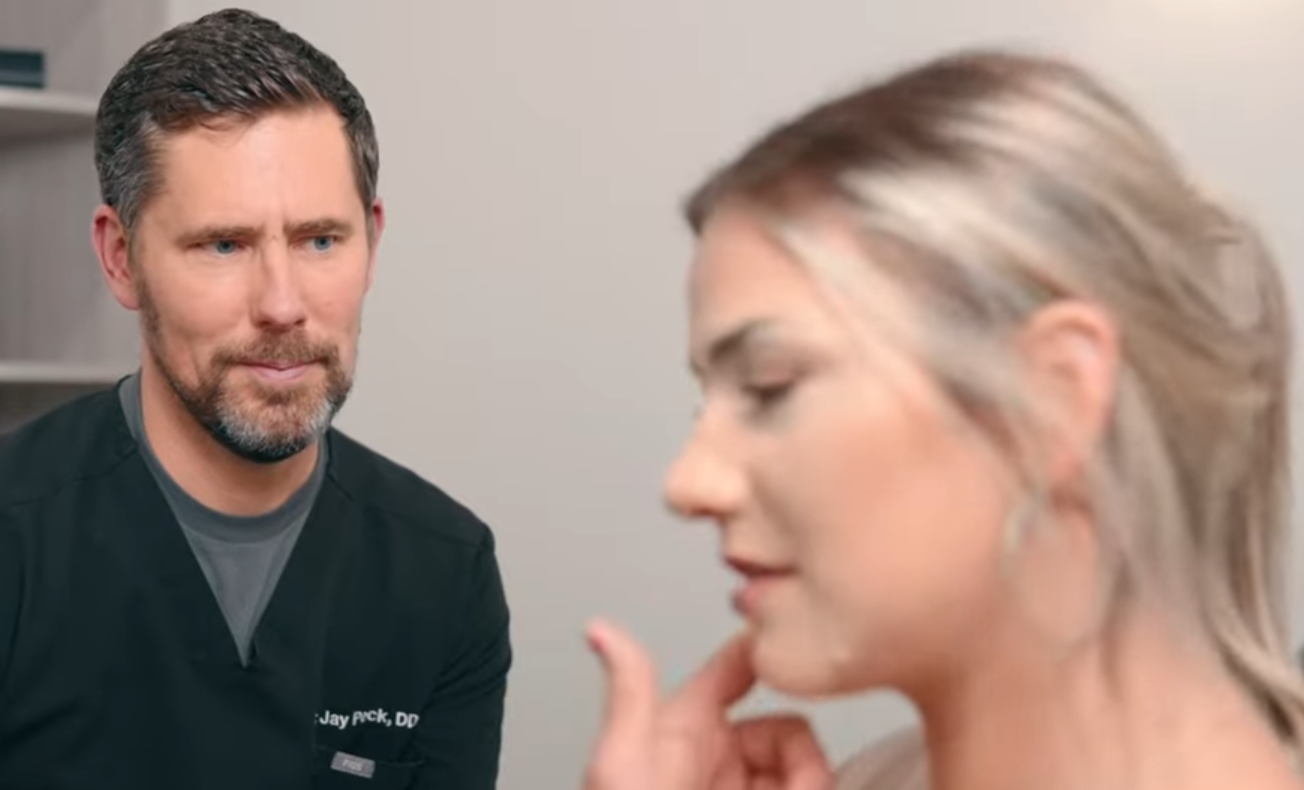

As a practitioner treating TMJ problems, I frequently see patients with abnormal tooth wear from pathological clenching or grinding. Often these patients will ask me about a "nightguard." Typically the word nightguard is used to mean a simple plastic cover for the teeth that is used to prevent damage from nighttime pathological function, but a nightguard is just one of several possible dental appliances that can be prescribed. Common appliances include nightguards, splints, orthotics, and mandibular advancement devices. Before making an appliance for a patient it is important to diagnose the causes and to prescribe the correct appliance. Is abnormal wear happening only at night? Does it happen in the day? Is it related to another condition like sleep apnea or gastric reflux? Is there pain or dysfunction in the jaw muscles or joint? The answer to these questions guides which appliance prescription is correct, and often one appliance may serve multiple purposes helping to treat multiple indications simultaneously. NIDCR: TMD; Riley et al., 2020.
When considering an appliance, I want the patient to understand both its purpose and its limitations. What problem are we treating? How will we know whether this appliance is helping? Those questions guide the prescription and give us a way to evaluate the result.
Tooth protection and treatment of jaw pain
Clenching or grinding the teeth is called bruxism. It can occur during sleep or while a person is awake. While nightguard covers the teeth to limit damaging contact, wearing one will not necessarily stop the clenching or grinding, so protecting the teeth is only one part of managing the problem. NIDCR: Bruxism.
Patients commonly use the term “TMJ” to describe jaw pain or dysfunction. Technically, TMJ refers to the jaw joint (temporomandibular joint) itself. Temporomandibular disorders (TMD) is the technically correct term for painful or dysfunctional conditions involving the jaw joints, chewing muscles, and associated headaches. When a patient has both tooth wear and a painful TMD, I need to consider both indications when considering an appliance prescription. An appliance made simply to protect teeth may not adequately address the patient’s pain or difficulty using the jaw. NIDCR: TMD.
What determines how an appliance functions?
Considerations in appliance selection include its material, which teeth it covers, how the opposing teeth contact it, and whether it permits movement or guides the jaw toward a particular position while worn. The answers to these questions describe the intent of the appliance. Depending on the intent the term nightguard, splint, or orthotic may be used to describe it, but the meaning of these terms overlaps. As a rule of thumb a therapeutic orthotic is prescribed to treat pain or dysfunction, but a nightguard is prescribed for tooth wear without pain or dysfunction. Usually splint is used as a synonym for orthotic.
Appliance description |
What I want a patient to understand |
|---|---|
OTC or boil-and-bite guard |
This is a prefabricated appliance adapted to the teeth. Buying one does not establish a diagnosis. Since treatment is initiated without diagnosis, results are variable. Sometimes these help. Sometimes they make things worse. They can be hard for patients to properly fit and may have fit issues. |
Custom nightguard or occlusal guard |
This is made for an individual mouth. The material and biting surface can vary, so the prescription should specify whether the goal is tooth protection, symptom management, or both. |
Full-coverage stabilization splint |
This covers one dental arch and provides a controlled contact surface for the opposing teeth. The goal is to prevent tooth wear and also to prevent joint irritation or damage by keeping the joints in orthopedically stable positions throughout nighttime function. |
Repositioning appliance |
This guides the jaw toward a selected position while worn. The diagnosis should explain why that design is appropriate, and follow-up should include monitoring for bite changes and possible termination of treatment if goals are met. |
These descriptions are not mutually exclusive. An appliance that a dentist calls a nightguard may also be a full-coverage stabilization splint and vice versa. The key is to understand the intended function and let that guide the prescription of appliance design. Riley et al., 2020; UK TMD guideline.
The research is not settled on the mechanism of appliance action. Explanations that have been proposed include changes in muscle activity, sensory input, and joint stability. Given the ongoing debate in the literature, the prescription and follow-up of a trained and experienced practitioner is the best way to receive treatment customized for your needs. Del Sorbo et al., 2026.
How I approach the diagnosis
Before recommending an appliance, I need to understand the patient’s pain, jaw function, habits, comorbidities, and the effect of symptoms on daily life. Establishing a proper diagnosis is the cornerstone of approriate treatment. This matters because patients with similar complaints may have different conditions requiring different treatment modalities to achieve improvement. Schiffman et al., 2014.
If you already have a guard, please bring it to your evaluation. I will ask what changed after you began wearing it. Is chewing more comfortable? Is there less soreness in the morning? Have symptoms remained the same or become worse? That information helps us assess the existing treatment and decide what needs to be reconsidered.
Imaging may be appropriate used when it can significantly help improve the diagnostic accuracy. I also rule out other causes of facial and jaw pain before attributing the symptoms to TMD. NIDCR: TMD.
My evaluation may support continued use of an existing guard, reconsideration of that appliance, or management without an appliance altogether. Whatever my recommendation, you patient should leave with an understandable explanation of the working diagnosis and how the proposed care addresses it.
What the research tells us about pain relief
There has been considerable research on the use of orthotics and splint for TMD pain. Most research finds that splint therapy may help but the size of the effect and the confidence of the research is low.
When II prescribe an appliance for TMD pain, I explain that some patients may benefit, but research has not established dependable pain relief or a clearly superior appliance design. Singh et al., 2024; UK TMD guideline; Del Sorbo et al., 2026. Furthermore, research suggest when used, orthotics are probably more useful for chronic pain than for acute flare-ups. Busse et al., 2023. There for I tend to be conservative in recommending orthotic/splint therapy. I recommend it most commonly for stabilization with the goal of preventing recurrence after acute joint and muscle problems have be treated.
Adjustment and follow-up are part of the prescription
All appliances needs to be evaluated after they are delivered. Bring your orthotic or nightguard to each follow-up, and I will assess its fit, the contacts between the teeth and appliance, comfort, and whether it is accomplishing our treatment goal. Appliances that partially cover an arch require particular caution because unwanted bite changes can occur. UK TMD guideline. I will also provide a wear schedule. More is not always better. An appliance prescribed as therapeutic does necessarily produce a better result with more wear. An appliance should not cause pain. In the rare case that this occurs, stop wearing it and contact the prescriber. If it is over the counter, discontinue use and contact an experienced partitioner. A change in how the teeth fit together after starting the appliance wear should also be reported promptly. Permanent changes to the teeth or bite may occasionally be a prescribed result but not a routine consequence of TMD treatment. NIDCR: TMD.
Considering treatment beyond an appliance
When evaluating a patient with jaw pain, I also consider options that do not require an appliance. For chronic TMD pain, the BMJ guideline favors approaches including education, supervised jaw exercise, selected manual therapies, and cognitive behavioral therapy. These treatments address pain management and function. Including behavioral care does not mean that the patient’s pain is imaginary. Busse et al., 2023.
During a flare, muscles relaxers with NSAID's, temporarily choosing softer foods, behavior modification for clenching, and avoiding gum chewing may help. Short-term pain relief can also be discussed with a clinician or pharmacist, taking into account the patient’s health and other medicines. NHS: TMD.
If symptoms are mild and improving, I often limit treatment to medical management followed by observation with a clear plan. Persistent or worsening symptoms often require intervention. A locked jaw (locked open or locked closed) or inability to eat or drink needs urgent dental or medical assessment rather than waiting for an appliance to be made. NHS: TMD.
Frequently asked questions
Can a regular nightguard help TMJ symptoms?
It may, but is typically not intended to do so. However some appliances described as nightguards are designed as stabilization splints, so I would first want to evaluate the design of the appliance you already have. Its name does not establish whether it is appropriate for your condition, and relief of TMD pain from appliances alone remains uncertain. Riley et al., 2020; Cochrane review.
Does painless clicking mean I need an orthotic?
Usually it does not. Clicking without pain or limited movement generally is not something that I recommend treating unless the noise is bothersome. I would want to evaluate any changes to symptoms like new pain or locking because changes may indicate progression of disease. The presence of a sound alone is usually insufficient reason to prescribe an appliance. NIDCR: TMD.
Is a hard appliance better than a soft one?
The material choice is driven by the diagnosis. It also affects how an appliance is fabricated and adjusted. Research has not established one universally superior option for TMD pain. When considering a hard or soft appliance, I want a clear rationale as to why that particular material and design are being considered for the diagnosed condition. Cochrane review.
My guard has not helped. Do I need a more advanced orthotic?
Maybe, if an appliance does not help. That is evidence that we need to refine the diagnosis. I would collect more information and reconsider the diagnosis and the intended treatment goal. I would also evaluate the fit of the existing appliance. If another appliance is recommended, there should be a clinical explanation of what would change and why that change might help.
How long should I try an appliance?
Those instructions should come from the prescribing clinician, along with specific treatment goals and a planned review point. Keeping a record of symptoms and jaw function helps us evaluate the response, including whether there has been meaningful improvement beyond simply tolerating the appliance.
Considering TMJ care in Edmond or Oklahoma City?
At Anagen Medical Institute, I provide TMJ/TMD care in Edmond for patients throughout the greater Oklahoma City area. If you are considering using a nightguard or TMJ orthotic, make an appointment for a consultation to receive an recommendation from an experienced practitioner who has helped many patients with TMD problems.
Request a consultation to discuss whether the treatment goal should be tooth protection, management of TMD, or both.
References
National Institute of Dental and Craniofacial Research. TMD (Temporomandibular Disorders). Last reviewed August 2026. Accessed September 12, 2026.
National Institute of Dental and Craniofacial Research. Bruxism. Accessed September 12, 2026.
Riley P, Glenny AM, Worthington HV, et al. Oral splints for patients with temporomandibular disorders or bruxism: a systematic review and economic evaluation. Health Technology Assessment. 2020;24(7). DOI: 10.3310/hta24070.
Schiffman E, Ohrbach R, Truelove E, et al. Diagnostic Criteria for Temporomandibular Disorders (DC/TMD) for Clinical and Research Applications: recommendations of the International RDC/TMD Consortium Network and Orofacial Pain Special Interest Group. Journal of Oral & Facial Pain and Headache. 2014;28(1):6–27. DOI: 10.11607/jop.1151.
Singh BP, Singh N, Jayaraman S, et al. Occlusal interventions for managing temporomandibular disorders. Cochrane Database of Systematic Reviews. 2024;9:CD012850. DOI: 10.1002/14651858.CD012850.pub2.
Busse JW, Casassus R, Carrasco-Labra A, et al. Management of chronic pain associated with temporomandibular disorders: a clinical practice guideline. BMJ. 2023;383:e076227. DOI: 10.1136/bmj-2023-076227.
NHS England Getting It Right First Time and Royal College of Surgeons of England, Faculty of Dental Surgery. Management of painful Temporomandibular disorder in adults. Version 1.1, August 27, 2025. See “Splint therapy,” PDF pages 42–43.
Del Sorbo D, Bijelic T, Häggman-Henrikson B, List T, Michelotti A, Bucci R. Occlusal Splint Therapy in the Management of Temporomandibular Disorders—Evidence from Systematic Reviews. Journal of Oral Rehabilitation. 2026;53(8):1562–1579. First published April 30, 2026. DOI: 10.1111/joor.70208.
NHS. Temporomandibular disorder (TMD). Page last reviewed June 20, 2023. Accessed September 12, 2026.